
A Sign Before the Unit Returns
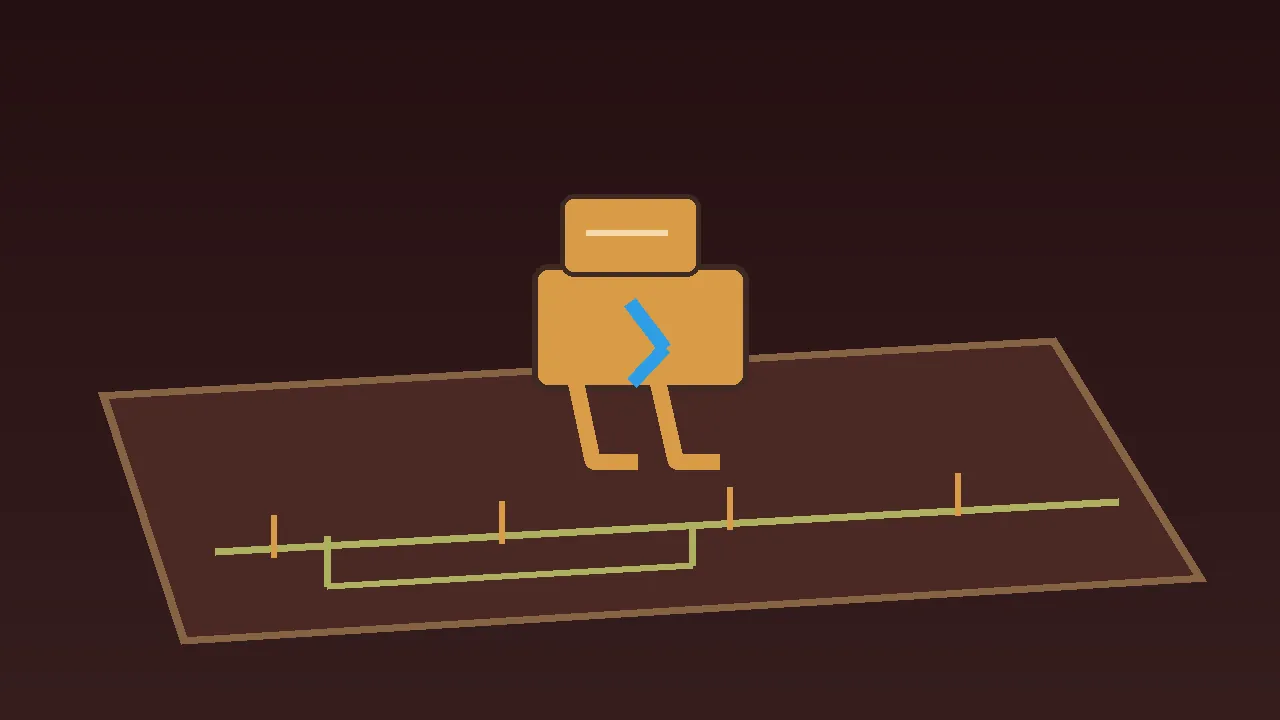
Give preparation a place before action
A unit can be almost ready at the end of the bench turn. The next frame can show it returned to the work row. At first we colored the new brace blue as soon as the earlier piece left the bench. It seemed to mean both that the refit finished and that the unit had already moved. We kept a shorter mark near the output of the bench and gave the actual appearance another shape on the line. That gives a reader a question about a small interval. Can the group move first even if the unit could soon join it? The drawing can show a useful answer while the old job is still available as a reference.
Keep the new part recognizable from both sides
The refitted courier retains its earlier leg shape and a short gold line near the old hinge. In the newer view a teal brace marks the change. Keep that same outline before the unit reaches the crossing. If the figure is drawn larger near the station, it can look like a wholly different piece. We preserve one sketch that shows the original posture and leave space here for the new part. A Brace Before the Next Crossing starts with this piece in an earlier place. A later state gives it a different task while the rest of the line can still use the old crossing. Tell the reader when the role becomes available. The shape gives them a place to point before another group moves.
Trace a turn with a partly open bench
In one drawing the courier has been set up but still holds last turn’s marker. The rest of the group can reach a route that does not use it. In another, the courier can return early enough to take the first available part. Keep the earlier group visible beside both. If the newer outcome depends on two changes, try holding one of them and read the same first move again. An earlier picture can remain useful in the second version by showing where preparation took place. A timestamp by itself does not tell a player which part of the group they can use. Put a short descriptive mark where that unit is ready. The start of its route can wait until the right turn.
Let a small spare help in the interval
A support piece can cover a short task while the courier waits. Its interval stays near the preparation mark but needs its own label. The Spare Holds One Place identifies the earlier task while another one stays online for a new unit. We use a different picture because the preparation in this study occurs before the action. The spare has a current move at a place you can already point to. In a later result be sure the newer courier’s label does not cover it. The reader can then tell when their chosen group can make another move and which part of the line still needs its older shape.
Compare the signals in a fixed view
For the next reading stop after setting up the part. Ask a player what the unit can actually do now. Then advance one turn and ask which group the unit can join. If both answers seem to refer to the same mark, make its pre-move outline distinct from the current row. The result can be tested from the last frame with the older one beside it. If a reader is able to trace a short path to the earlier preparation mark, we can add another action without changing which part of the sketch gives the first question a place.