
The Turn the Bench Is Busy
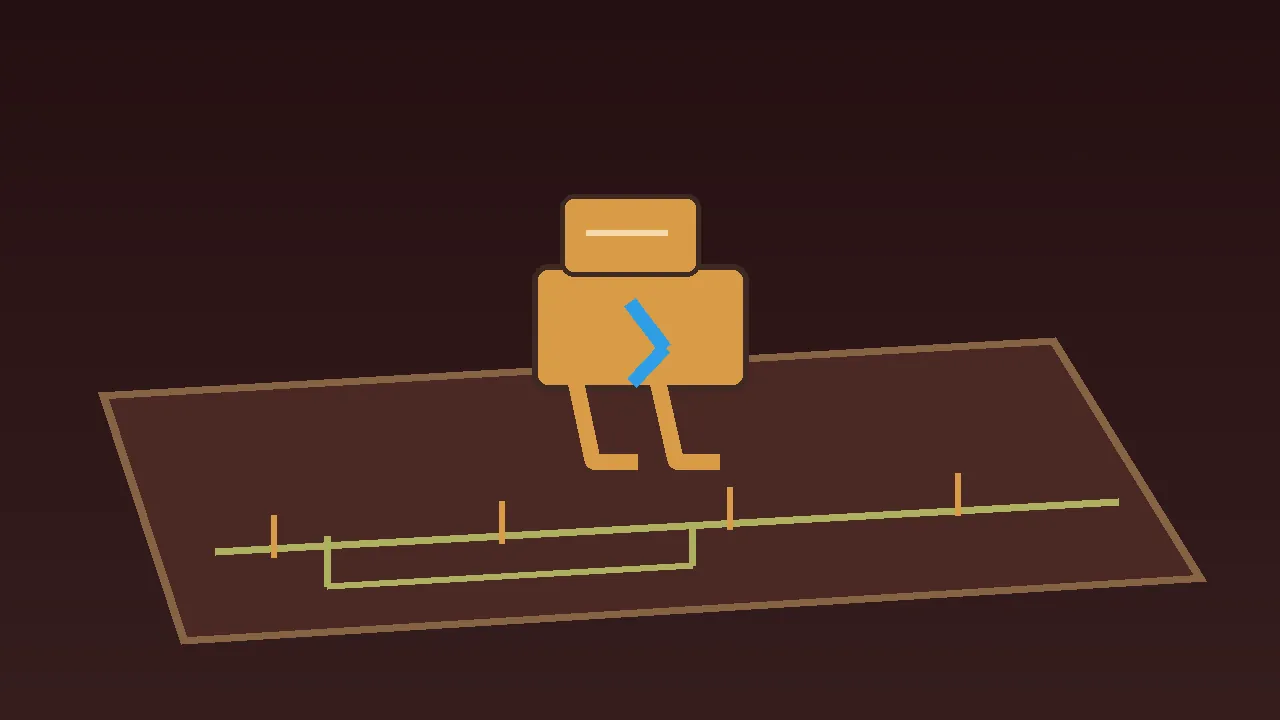
Find the interval before the group moves
The opening line has three pieces and one courier near the bench. The courier could take a brace that changes its later carrying action. The next move for the other pieces is already visible. We first marked the courier unavailable by moving it out of the picture. A reader saw the new brace in the next view and could not explain what the other pieces had done meanwhile. Show a bracket for the time on the bench. Keep the earlier crossing on its own row. A separate label can indicate when the courier rejoins, with room to see who can reach the later platform beforehand. The figures and time scale belong entirely to the game.
Let the previous place keep a small outline
When the unit goes to the bench, its starting position needs a border. A later piece can move past it before the refit finishes. In the original chart both arrows used that open position. If the courier left, someone thought the second piece would automatically take its job. We drew the bench interval below the movement instead. That makes it possible to see the group route and one unit’s timing in the same picture. Keep an empty place on the line briefly before another piece comes in. The drawing can show which move that piece actually covers. If they both enter at the same point in the current test, move their first times apart by enough to compare their resources separately.
Read the crossing from one turn farther away
In A Brace Before the Next Crossing, choose the refit and follow the first viewpoint. The next picture leaves the rest of the group near the crossing while the unit’s older role can still be read. Try the opposite plan with the earlier courier present and put the two outcomes side by side. A reader can then identify a task the group can use while waiting. The view should show when the refit takes its turn and where the other piece needs a move. That is another thing to read before learning whether the new brace gives the courier a useful action later. The current test retains the place the original piece occupied at the beginning.
Draw readiness outside the older turn mark
The brace can appear before the unit is ready for another movement. We want a small marker for that stage and another at the point when the line can actually use it. A Sign Before the Unit Returns gives the ready mark a place beside an earlier outline. The picture can then show a courier waiting with a refit already drawn beside it. In the older view we used the same blue block for both. That made both events seem to happen together after the time moved. Try them as different pieces on the track while keeping the original bench interval. A reader can take another action only after seeing the next opening.
Keep the later comparison from losing its start
Ask a tester to locate the occupied turn. Then look past the bench and see what another member of the sequence can still do. If a new position looks unclear, go back to the earlier outline and check whether the latest route covers it. We may prefer a shorter line to a brighter marker. The next drawing can leave the bracket and old crossing in the same relative positions when we make another alteration. After the reader can explain one change, run the short refit with another unit that has a different role. The original bench should stay familiar enough to compare both uses without adding another set of timing rules.